CFA vs CFP: compare the work, curriculum and requirements
CFA is the broader investment-analysis and portfolio-management route. CFP focuses on personal financial planning. Choose according to the work you want to do and the designation your target employers or clients expect.
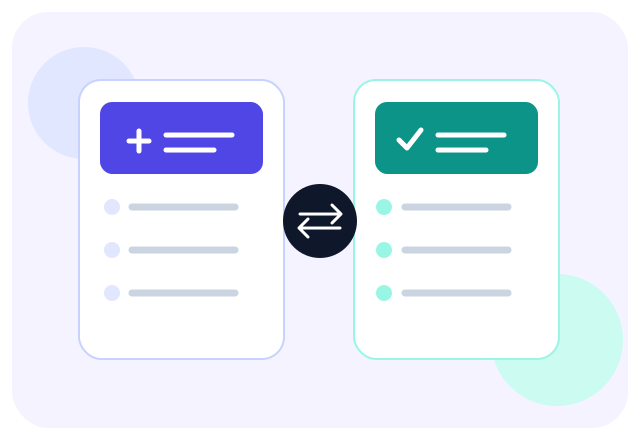
CFA and CFP, side by side*
| Dimension | CFA | CFP |
|---|---|---|
| Main focus | Investment analysis and portfolio management | personal financial planning |
| Program structure | Three exam levels, PSMs and charter requirements | US education, exam, experience and ethics requirements |
| Work to investigate | Investment research, valuation and portfolio decisions | Household goals, retirement, tax, estate and insurance planning |
| Decision question | Do I need broad investment knowledge? | Do I need depth in personal financial planning? |
Main focus
- CFA
- Investment analysis and portfolio management
- CFP
- personal financial planning
Program structure
- CFA
- Three exam levels, PSMs and charter requirements
- CFP
- US education, exam, experience and ethics requirements
Work to investigate
- CFA
- Investment research, valuation and portfolio decisions
- CFP
- Household goals, retirement, tax, estate and insurance planning
Decision question
- CFA
- Do I need broad investment knowledge?
- CFP
- Do I need depth in personal financial planning?
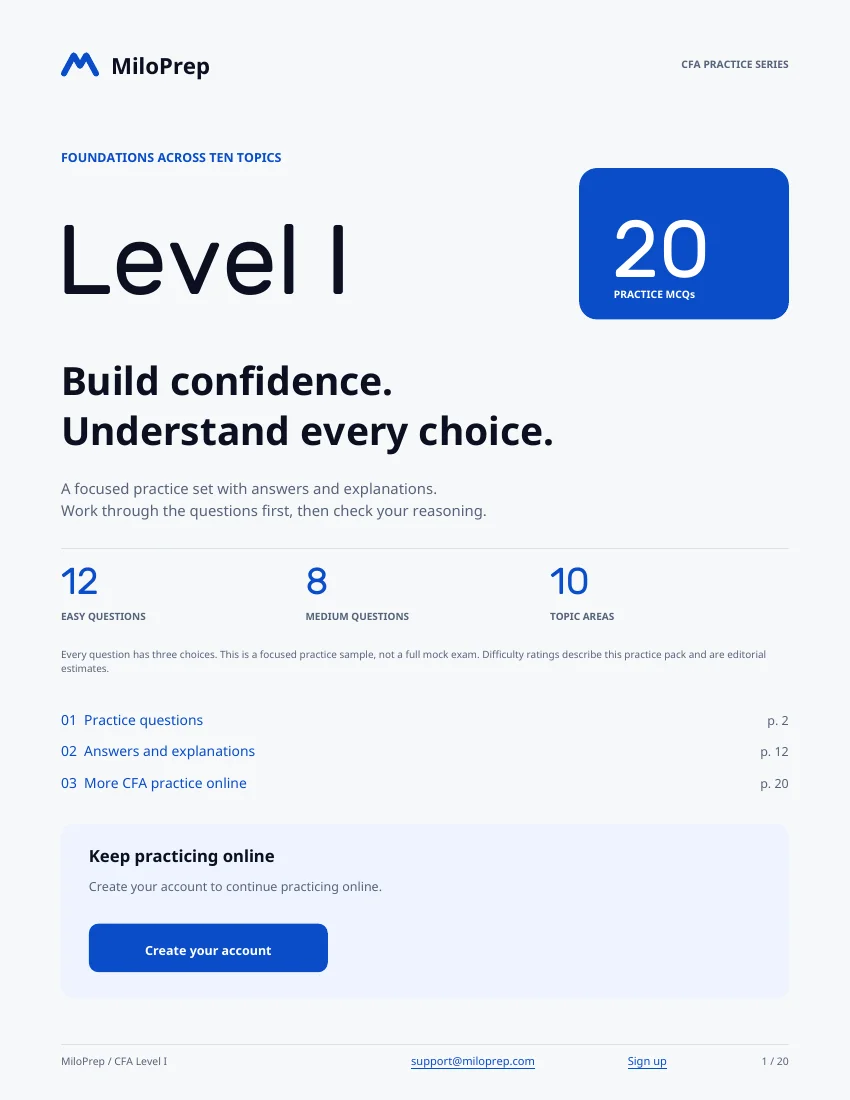
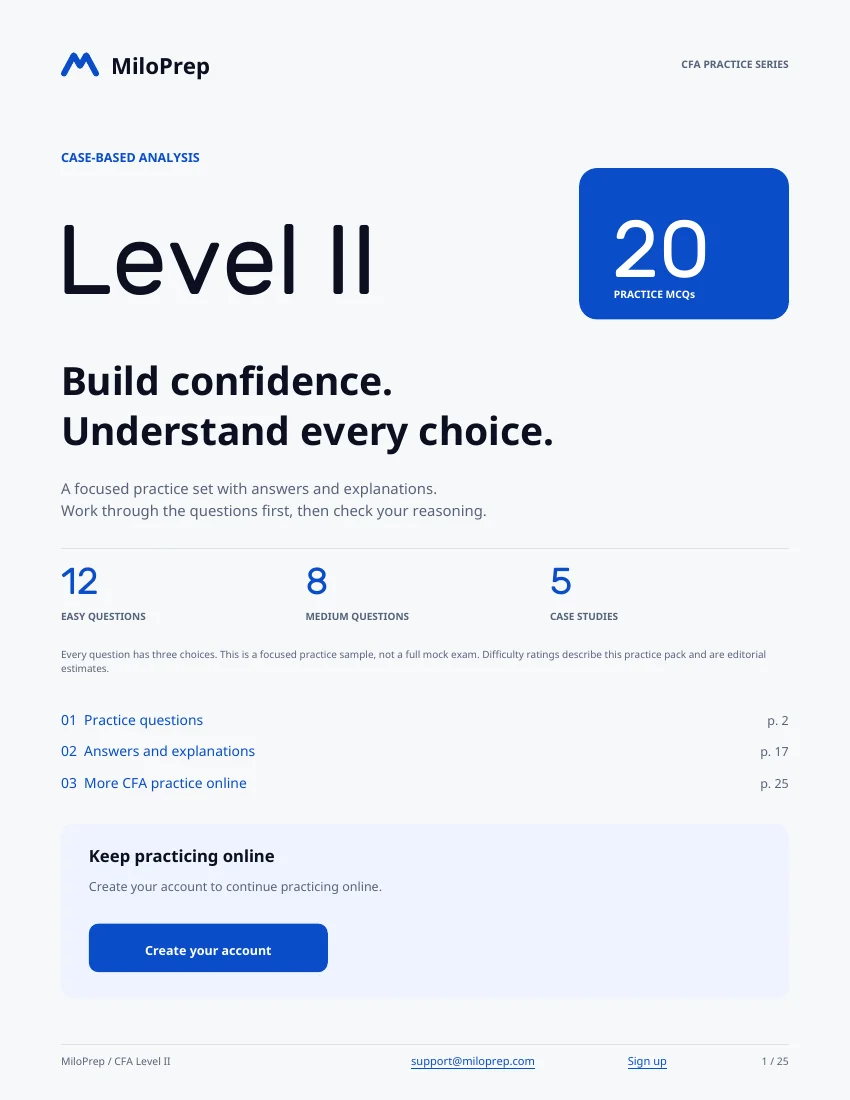
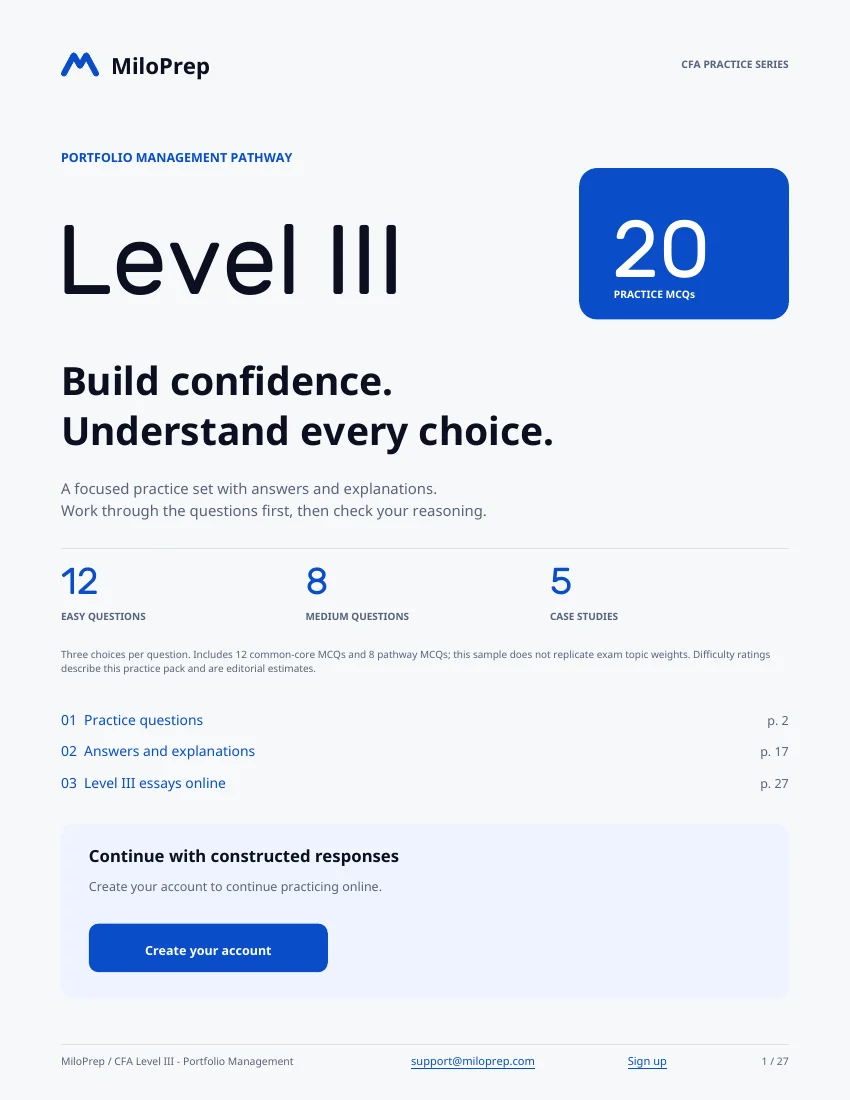
Free PDF by email
All 5 CFA practice PDFs, in one email
Enter your email on the PDF page to receive all 5 printable packs, with answers and explanations. Selected level/pathway questions; see the topic mix before requesting.
No account or payment required for the PDFs. Includes the monthly newsletter; unsubscribe anytime.
Find your direction
Which work do you want to do?*
CFA
Investment analysis and portfolio decisions
CFP
US personal financial planning
Choose using the work you want to do
Look at actual role requirements
Compare several current roles in your location. Record whether a designation is required, preferred or absent, and what tasks recur.
Check your eligibility and experience
Exam passes alone do not automatically award either designation. Read the CFA and CFP requirements before budgeting time and fees.
Decide whether a second designation adds value
CFA emphasizes investment analysis; CFP emphasizes an integrated personal financial plan. Start with the one that addresses your immediate work rather than studying for both by default.
A practical choice exercise
| If your next task is... | Investigate first | Why |
|---|---|---|
| Analyze securities for a portfolio | CFA | Investment analysis and portfolio decisions |
| Build a household retirement plan | CFP | Integrated personal financial planning |
Analyze securities for a portfolio
- Investigate first
- CFA
- Why
- Investment analysis and portfolio decisions
Build a household retirement plan
- Investigate first
- CFP
- Why
- Integrated personal financial planning
Compare the experience requirements
This comparison uses US CFP Board requirements.
| Requirement | CFA | CFP in the US |
|---|---|---|
| Learning and assessment | Three exam levels and practical modules | Education, exam, experience and ethics requirements |
| Experience | At least 4,000 qualifying hours over no fewer than 36 months | 6,000-hour standard route or 4,000-hour apprenticeship route with additional conditions |
| What counts | Work that contributes to investment decision-making | Experience related to the personal financial planning process under the chosen route |
Learning and assessment
- CFA
- Three exam levels and practical modules
- CFP in the US
- Education, exam, experience and ethics requirements
Experience
- CFA
- At least 4,000 qualifying hours over no fewer than 36 months
- CFP in the US
- 6,000-hour standard route or 4,000-hour apprenticeship route with additional conditions
What counts
- CFA
- Work that contributes to investment decision-making
- CFP in the US
- Experience related to the personal financial planning process under the chosen route
Compare the full commitment, not just the exam count
| Cost or time | Record for each option | Why the comparison changes |
|---|---|---|
| Registration | The fee for your actual window and registration date | Early and standard registration can have different prices. |
| Learning materials | Included curriculum plus any optional course, mocks or tuition | A lower exam fee does not necessarily mean a lower study budget. |
| Experience and membership | Qualifying work, application and ongoing professional obligations | Finishing exams and earning the designation are different milestones. |
| Opportunity cost | Study hours you can sustain alongside work and family | A shorter program on paper can still be a poor fit for your next role. |
Registration
- Record for each option
- The fee for your actual window and registration date
- Why the comparison changes
- Early and standard registration can have different prices.
Learning materials
- Record for each option
- Included curriculum plus any optional course, mocks or tuition
- Why the comparison changes
- A lower exam fee does not necessarily mean a lower study budget.
Experience and membership
- Record for each option
- Qualifying work, application and ongoing professional obligations
- Why the comparison changes
- Finishing exams and earning the designation are different milestones.
Opportunity cost
- Record for each option
- Study hours you can sustain alongside work and family
- Why the comparison changes
- A shorter program on paper can still be a poor fit for your next role.
Make the choice concrete
Imagine advising a household that needs retirement income and an investment portfolio.
The CFA lens
Focus on investment analysis, asset allocation and portfolio decisions.
The CFP lens
Integrate investments with the household’s retirement, insurance, tax and estate-planning needs under the applicable jurisdiction.
Your decision
If you want to own the whole personal financial plan, investigate CFP requirements. If you want investment-analysis depth, investigate CFA. Some roles need both perspectives.
Three career scenarios to make the comparison useful
These are curriculum-to-task judgments. They are not hiring requirements, salary estimates or promises of employment.
| Your intended work | A reasonable starting point | Question to resolve |
|---|---|---|
| Investment research role | Investigate CFA when the main task is security analysis or portfolio decisions. | A planning designation is not a substitute for the investment depth a specific research role requires. |
| Household planning role | Investigate US CFP requirements when the main task is an integrated personal financial plan. | Check the education and experience path in your jurisdiction, not just the exam. |
| Wealth-management role | Start with the tasks you will personally own. | Selecting investments and coordinating tax, insurance, retirement and estate needs are related responsibilities with different knowledge gaps. |
Investment research role
- A reasonable starting point
- Investigate CFA when the main task is security analysis or portfolio decisions.
- Question to resolve
- A planning designation is not a substitute for the investment depth a specific research role requires.
Household planning role
- A reasonable starting point
- Investigate US CFP requirements when the main task is an integrated personal financial plan.
- Question to resolve
- Check the education and experience path in your jurisdiction, not just the exam.
Wealth-management role
- A reasonable starting point
- Start with the tasks you will personally own.
- Question to resolve
- Selecting investments and coordinating tax, insurance, retirement and estate needs are related responsibilities with different knowledge gaps.
How to compare difficulty and value for your circumstances
Compare gaps, not just exam counts
A familiar subject can take less effort than a new one even in a longer program. Read sample learning outcomes from each route and try a relevant question. Mark what you can already explain and what requires a new foundation.
Keep pass rates in context
A published pass rate describes a particular group and sitting. The candidates, prerequisites, assessments and preparation differ across programs. A lower rate alone does not establish which route is harder for you or which employers value more.
Ask what changes in your work
Write one concrete assignment you want to perform better, such as evaluating a security, building a household plan or explaining a risk exposure. Compare each program’s learning with that assignment before estimating whether the time and cost are justified.
Should you pursue both?
Sequence the decision around a demonstrated need. Completing one program does not automatically make another a good investment of your time.
| Situation | Practical next step |
|---|---|
| One program closely matches your next role | Focus on that route and build relevant work samples or experience alongside it. |
| Your role spans both sets of responsibilities | List what the second curriculum adds and what overlaps. Compare the added value with the study time it displaces. |
| You are choosing mainly from salary anecdotes | Check current roles in your location and experience band. A designation-level salary average cannot isolate the effect of earning it. |
| You expect an exemption or alternative entry route | Verify the awarding body’s current rule and your own eligibility before budgeting fewer exams. |
One program closely matches your next role
- Focus on that route and build relevant work samples or experience alongside it.
Your role spans both sets of responsibilities
- List what the second curriculum adds and what overlaps. Compare the added value with the study time it displaces.
You are choosing mainly from salary anecdotes
- Check current roles in your location and experience band. A designation-level salary average cannot isolate the effect of earning it.
You expect an exemption or alternative entry route
- Verify the awarding body’s current rule and your own eligibility before budgeting fewer exams.
Quick answers
- Is CFA better than CFP?
- There is no universal winner. CFA emphasizes investment analysis; CFP emphasizes an integrated personal financial plan. Compare the curriculum against the role and jurisdiction you intend to work in.
- Does either designation guarantee a job or higher salary?
- No. A designation can support knowledge and professional development, but employer demand, experience, location and demonstrated skills also matter.
Ready to try a few questions?
Free PDF by email
All 5 CFA practice PDFs, in one email
Enter your email on the PDF page to receive all 5 printable packs, with answers and explanations. Selected level/pathway questions; see the topic mix before requesting.
No account or payment required for the PDFs. Includes the monthly newsletter; unsubscribe anytime.
PDF delivery requires email and includes the monthly newsletter. Unsubscribe anytime.
Notes
- * CFA and CFP, side by side: CFP requirements here refer to the United States and CFP Board. Other jurisdictions have different certification rules. Career fit is our interpretation of the curricula, not a hiring, salary or return-on-investment guarantee. ↩ Return to content
- * Curriculum and career direction: Curriculum-to-task interpretation, not a hiring or salary prediction. Check experience and membership requirements as well as exams. ↩ Return to content