CFA Level 1 Ethics: notes and free practice
CFA Level 1 Ethics applies the Code and Standards to professional conduct. Identify the duty, the decisive case fact and the required action; disclosure alone does not resolve every conflict or violation.
The key ideas, at a glance
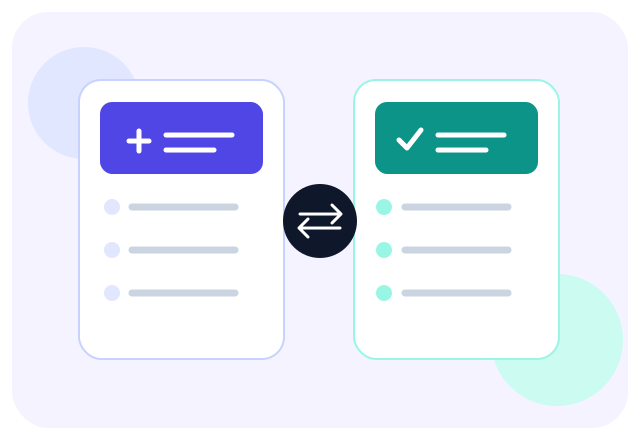
Start with the duty
Read the visual, then follow the worked example below. Use the stated case assumptions.
Illustrative worked case
Which obligation is stricter?
Local law is stricter
Follow the stricter legal requirement
Professional requirement is stricter
Follow the stricter professional requirement
In the worked case, local permission does not override the stricter professional obligation.
| Concept | Rule or decision | Common mistake |
|---|---|---|
| Start with the duty | Facts → applicable duties → action | Legal permission is not proof that conduct meets professional standards. |
| Separate evidence from influence | Access is not permission to trade | Telling a client where a confidential tip came from does not make trading on it acceptable. |
| Match service to the client | Portfolio needs before product appeal | A client’s enthusiasm for return does not erase a near-term liquidity need. |
| Make conflicts visible | Avoid → disclose → manage | A buried disclosure may not communicate the conflict effectively. |
01Start with the duty
Facts → applicable duties → action
Watch for: Legal permission is not proof that conduct meets professional standards.
02Separate evidence from influence
Access is not permission to trade
Watch for: Telling a client where a confidential tip came from does not make trading on it acceptable.
03Match service to the client
Portfolio needs before product appeal
Watch for: A client’s enthusiasm for return does not erase a near-term liquidity need.
04Make conflicts visible
Avoid → disclose → manage
Watch for: A buried disclosure may not communicate the conflict effectively.
Selected 2026 study concepts. Match your preparation to your registered exam-year curriculum. These notes are not complete curriculum coverage.
Free PDF by email
CFA Level I: 20 practice MCQs
Enter your email on the PDF page to receive the printable pack, with answers and explanations. Selected level/pathway questions; see the topic mix before requesting.
No account or payment required for the PDFs. Includes the monthly newsletter; unsubscribe anytime.
Put the method to work
One worked example, from facts to answer
Given
A permitted local sales practice conflicts with a stricter professional requirement.
Method
Compare the two obligations before accepting the assignment.
Answer and interpretation
Follow the stricter obligation and document the decision.
Original independent teaching example. Assumptions are stated above; this is not an official exam question or scoring key.
Try it here - no account needed
10 free Ethics questions
Choose an answer, check the reasoning, then use ‘Review the method’ to revisit the exact idea. Selected practice, not a complete syllabus or pass prediction.
Saved in this tab when storage is available. Responses are not uploaded.
Completed
0 / 10
MCQ correct
0 / 0
Completion is not an exam score.
- Question 1 of 10Level I topic sampleEthical and Professional StandardsMultiple choice
An analyst faces a local rule allowing a sales practice and an applicable professional standard prohibiting it. Which approach is consistent with Standard I(A)?
Answer and explanations
Where applicable requirements conflict, the stricter obligation governs the analyst’s conduct.
Review the method- A: Local permission does not remove the stricter professional obligation.
- B - correct: Where applicable requirements conflict, the stricter obligation governs the analyst’s conduct.
- C: A customer cannot waive the analyst’s applicable professional obligations.
- Question 2 of 10Level I topic sampleEthical and Professional StandardsMultiple choice
A researcher confirms that a report knowingly misstates evidence. Compliance refuses to correct it. What is the appropriate next action?
Answer and explanations
She should dissociate rather than remain associated with the known violation; further steps depend on the facts and applicable requirements.
Review the method- A: Escalation alone does not justify continued association with known misleading work.
- B: A private note does not correct the public misstatement or remove participation.
- C - correct: She should dissociate rather than remain associated with the known violation; further steps depend on the facts and applicable requirements.
- Question 3 of 10Level I topic sampleEthical and Professional StandardsMultiple choice
A finance director privately tells an analyst about a large, unannounced earnings shortfall. The information is material. What should the analyst do about a proposed client trade based on it?
Answer and explanations
Material nonpublic information must not be used to trade or induce trading; follow the firm’s restriction process.
Review the method- A - correct: Material nonpublic information must not be used to trade or induce trading; follow the firm’s restriction process.
- B: Disclosure to one client does not make the information public or permit the trade.
- C: A small trade still uses material nonpublic information.
- Question 4 of 10Level I topic sampleEthical and Professional StandardsMultiple choice
An analyst receives a vendor’s stock ranking but cannot establish its inputs, methodology or reliability. What best supports a defensible recommendation?
Answer and explanations
Assess the process, assumptions and reliability before using outside work as the basis for a recommendation.
Review the method- A: Popularity does not establish adequate research or a reasonable basis.
- B - correct: Assess the process, assumptions and reliability before using outside work as the basis for a recommendation.
- C: A disclaimer does not replace diligence on the basis of a recommendation.
- Question 5 of 10Level I topic sampleEthical and Professional StandardsMultiple choice
A company offers an analyst a bonus conditional on a favorable report. Which response best protects objectivity?
Answer and explanations
Declining compensation tied to a favorable conclusion removes the direct incentive to compromise independent judgment.
Review the method- A: Late disclosure does not address compensation designed to influence the conclusion.
- B: A plausible conclusion does not eliminate the improper incentive.
- C - correct: Declining compensation tied to a favorable conclusion removes the direct incentive to compromise independent judgment.
- Question 6 of 10Level I topic sampleEthical and Professional StandardsMultiple choice
A former client’s records are requested by a marketing agency. There is no client permission, legal requirement or suspected illegal activity. What is appropriate?
Answer and explanations
The confidentiality duty also covers former clients; none of the stated facts authorizes disclosure.
Review the method- A - correct: The confidentiality duty also covers former clients; none of the stated facts authorizes disclosure.
- B: Ending the commercial relationship does not end the confidentiality obligation.
- C: A contract with the agency does not substitute for client authorization or another applicable exception.
- Question 7 of 10Level I topic sampleEthical and Professional StandardsMultiple choice
Two equally suitable client accounts request a limited new issue. The adviser favors one because its owner sends personal gifts. Which principle is most directly at risk?
Answer and explanations
Gift-based favoritism undermines fair, objective allocation between otherwise comparable client accounts.
Review the method- A: Fair treatment does not require identical portfolios where client needs differ.
- B - correct: Gift-based favoritism undermines fair, objective allocation between otherwise comparable client accounts.
- C: New issues are not categorically prohibited; the allocation process is the problem.
- Question 8 of 10Level I topic sampleEthical and Professional StandardsMultiple choice
An investor wants a high return on money needed for a house payment in three months. A proposed investment prohibits redemption for three years. What must the adviser address first?
Answer and explanations
The three-year lockup conflicts with the three-month cash need; suitability must reflect that constraint.
Review the method- A: Recent returns do not resolve the mismatch between access to funds and the payment date.
- B: A sales target cannot displace the client’s needs in suitability analysis.
- C - correct: The three-year lockup conflicts with the three-month cash need; suitability must reflect that constraint.
- Question 9 of 10Level I topic sampleEthical and Professional StandardsMultiple choice
A portfolio manager wants to buy a stock personally before executing an already-decided client purchase of that stock. What should she do?
Answer and explanations
Client and employer transactions take priority over beneficially owned personal trades; comply with preclearance and other controls.
Review the method- A - correct: Client and employer transactions take priority over beneficially owned personal trades; comply with preclearance and other controls.
- B: Changing brokers does not change beneficial ownership or the priority obligation.
- C: Later disclosure does not cure trading ahead of the client.
- Question 10 of 10Level I topic sampleEthical and Professional StandardsMultiple choice
A person has passed Level I, is registered for Level II, and has not earned the charter. Which statement is appropriate?
Answer and explanations
This describes the passed examination and actual registered candidacy without claiming the charter.
Review the method- A: Passing a level does not confer a partial charter or the right to use the designation.
- B - correct: This describes the passed examination and actual registered candidacy without claiming the charter.
- C: Candidacy does not guarantee superior investment performance.
Four ideas to put to work
Find the method you need
Start with: Read each person’s role, information access and client relationship before choosing an action.
METHOD 01
Start with the duty
Facts → applicable duties → action
- Identify whose interests the professional must protect.
- Compare applicable requirements; follow the stricter requirement when they differ.
- Escalation does not excuse continued participation in a violation.
Worked example
- Given
- A permitted local sales practice conflicts with a stricter professional requirement.
- Calculate / decide
- Compare the two obligations before accepting the assignment.
- Result
- Follow the stricter obligation and document the decision.
Watch for: Legal permission is not proof that conduct meets professional standards.
Practise this ideaMETHOD 02
Separate evidence from influence
Access is not permission to trade
- Check materiality and public availability under Standard II(A); possession does not permit trading.
- Under I(B), reject benefits designed to influence research. Use ordinary firm-paid travel when it is reasonably available.
- Under V(A), assess the research basis; neither a sponsor’s reassurance nor a disclaimer replaces diligence.
Worked example
- Given
- An issuer offers a research analyst a luxury hotel for a site visit. Ordinary travel and accommodation are available.
- Calculate / decide
- Identify the inducement separately from the information needed for the analysis. Arrange ordinary travel paid by the analyst or firm.
- Result
- Avoid the luxury benefit. Telling readers about it later would not make it the appropriate choice in this case.
Change one fact
Instead, an analyst derives a forecast from public reports and nonmaterial supplier observations, with no material private tip.
Under mosaic analysis, a significant conclusion can result from permissible inputs. Document the research rather than treating every nonpublic observation as prohibited.
The information restriction differs from a material earnings tip. Check each input’s materiality and availability before acting.
Watch for: Telling a client where a confidential tip came from does not make trading on it acceptable.
Practise this ideaMETHOD 03
Match service to the client
Portfolio needs before product appeal
- Assess suitability in the context of the client’s portfolio and constraints.
- Handle recommendations and allocations fairly, not through favoritism.
- Protect client information; check authorization and applicable exceptions before disclosure.
Worked example
- Given
- A client needs tuition cash in four months; a fund locks capital for five years.
- Calculate / decide
- Compare the spending date with the redemption restriction.
- Result
- Do not commit the tuition reserve to the locked fund.
Watch for: A client’s enthusiasm for return does not erase a near-term liquidity need.
Practise this ideaMETHOD 04
Make conflicts visible
Avoid → disclose → manage
- Avoid conflicts where feasible; make remaining material conflicts clear.
- Give client and employer transactions priority over your beneficially owned trades.
- Describe your CFA status accurately without promising superior investment results.
Worked example
- Given
- An analyst owns shares in a company she is about to recommend.
- Calculate / decide
- Address the holding through disclosure and the firm’s dealing controls.
- Result
- The reader can evaluate the conflict; disclosure is not a license to front-run.
Change one fact
The analyst now proposes buying more shares before an already-decided client purchase.
This introduces transaction priority under VI(B), beyond the ownership disclosure addressed by VI(A).
Give the client trade priority and follow dealing controls. Disclosure does not permit trading ahead of that client.
Watch for: A buried disclosure may not communicate the conflict effectively.
Practise this ideaQuestions about this topic
- Does disclosure resolve every ethical conflict?
- No. Some conduct must be avoided or corrected even after disclosure. Identify the applicable duty, the conflict and the required action before deciding whether disclosure is sufficient.
- What should I identify first in an Ethics scenario?
- Identify the professional duty and the person or relationship affected. Then use the decisive facts to assess conduct, rather than judging the investment’s profitability or the candidate’s good intentions alone.
- Is a client’s permission enough to use material nonpublic information?
- No. Client consent does not remove the restrictions on using material nonpublic information. Assess materiality and public availability, and follow the applicable Code and Standards requirements.
Sources and curriculum scope
Official outlines establish curriculum scope. The explanations and worked examples are independent teaching material; the sources do not verify or endorse them.
- 2026 CFA Level I outline: Ethics
- Official guidance: I(B) independence and travel
- Official guidance: VI(A) avoid or disclose conflicts
- Code of Ethics and Standards of Professional Conduct
- Standards of Practice Handbook, 12th edition (2024)
- II(A): material nonpublic information and mosaic analysis
- VI(B): priority of transactions
- 2026 CFA Level 1 curriculum outline
- 2027 CFA Level 1 curriculum outline
MiloPrep is an independent study resource, not affiliated with or endorsed by CFA Institute. CFA® and Chartered Financial Analyst® are trademarks owned by CFA Institute.