CFA Level 3 pathways: Portfolio Management, Private Markets and Private Wealth
Level III combines a common core with one selected pathway: Portfolio Management, Private Markets or Private Wealth. Match pathway study to the pathway in your registration; the three pathways emphasize different investment decisions.
The key ideas, at a glance

Common core
Read the visual, then follow the worked example below. Use the stated case assumptions.
Illustrative worked case
Which specialized outline matches the candidate record?
Portfolio Management
Portfolio strategy and implementation outcomes
Private Markets
Private investment and due-diligence outcomes
Private Wealth
Individual and family wealth outcomes
All pathways retain common-core study. The worked case is registered for Private Markets; check the outline year as well.
| Concept | Rule or decision | Common mistake |
|---|---|---|
| Common core | All pathways share Asset Allocation, Portfolio Construction, Performance Measurement, Derivatives and Risk Management, and Ethics. | A pathway does not replace common-core preparation. |
| Portfolio Management | Focus on portfolio strategies, implementation and the management of investment mandates. | Choose the matching official pathway outline, not a different pathway’s notes. |
| Private Markets | Focus on private investment structures, analysis, due diligence and value creation. | Illiquidity, commitments and exit assumptions need explicit attention. |
| Private Wealth | Focus on individual and family objectives, planning and wealth-management decisions. | Client constraints and the case’s tax and transfer rules shape the answer. |
01Common core
All pathways share Asset Allocation, Portfolio Construction, Performance Measurement, Derivatives and Risk Management, and Ethics.
Watch for: A pathway does not replace common-core preparation.
02Portfolio Management
Focus on portfolio strategies, implementation and the management of investment mandates.
Watch for: Choose the matching official pathway outline, not a different pathway’s notes.
03Private Markets
Focus on private investment structures, analysis, due diligence and value creation.
Watch for: Illiquidity, commitments and exit assumptions need explicit attention.
04Private Wealth
Focus on individual and family objectives, planning and wealth-management decisions.
Watch for: Client constraints and the case’s tax and transfer rules shape the answer.
Selected 2026 study concepts. Match your preparation to your registered exam-year curriculum. These notes are not complete curriculum coverage.
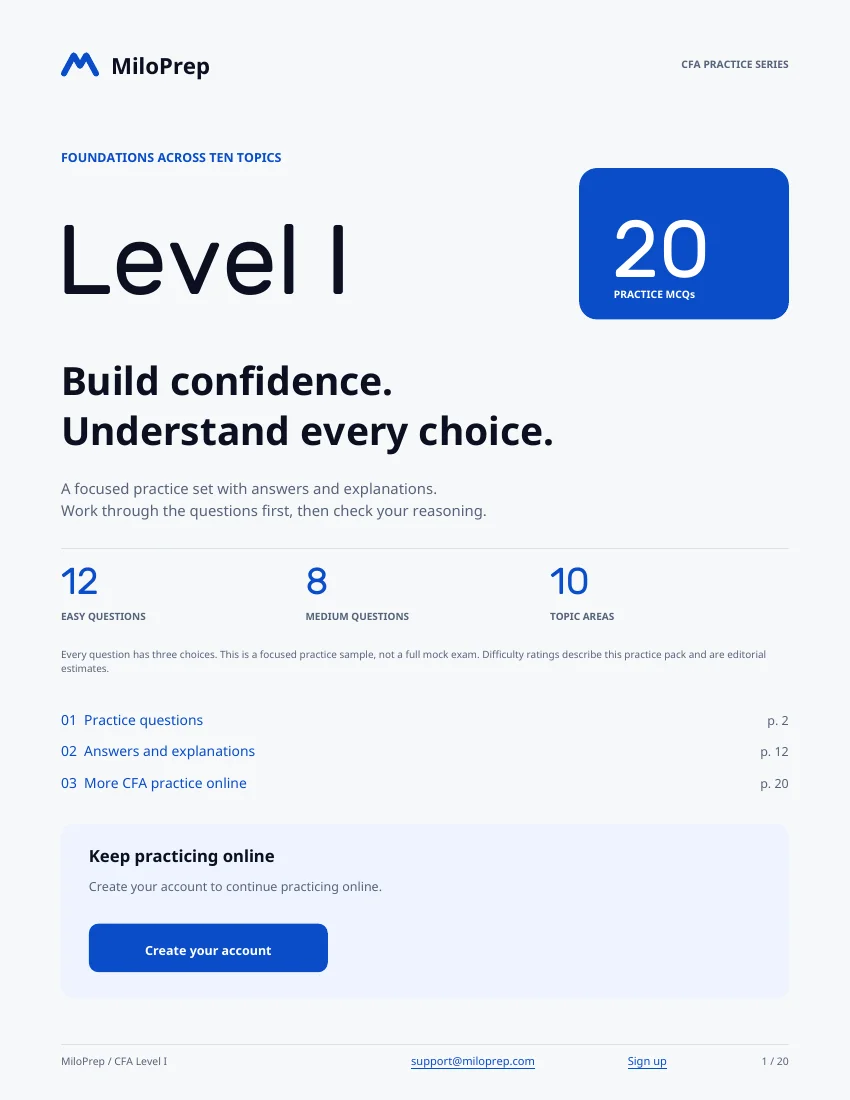
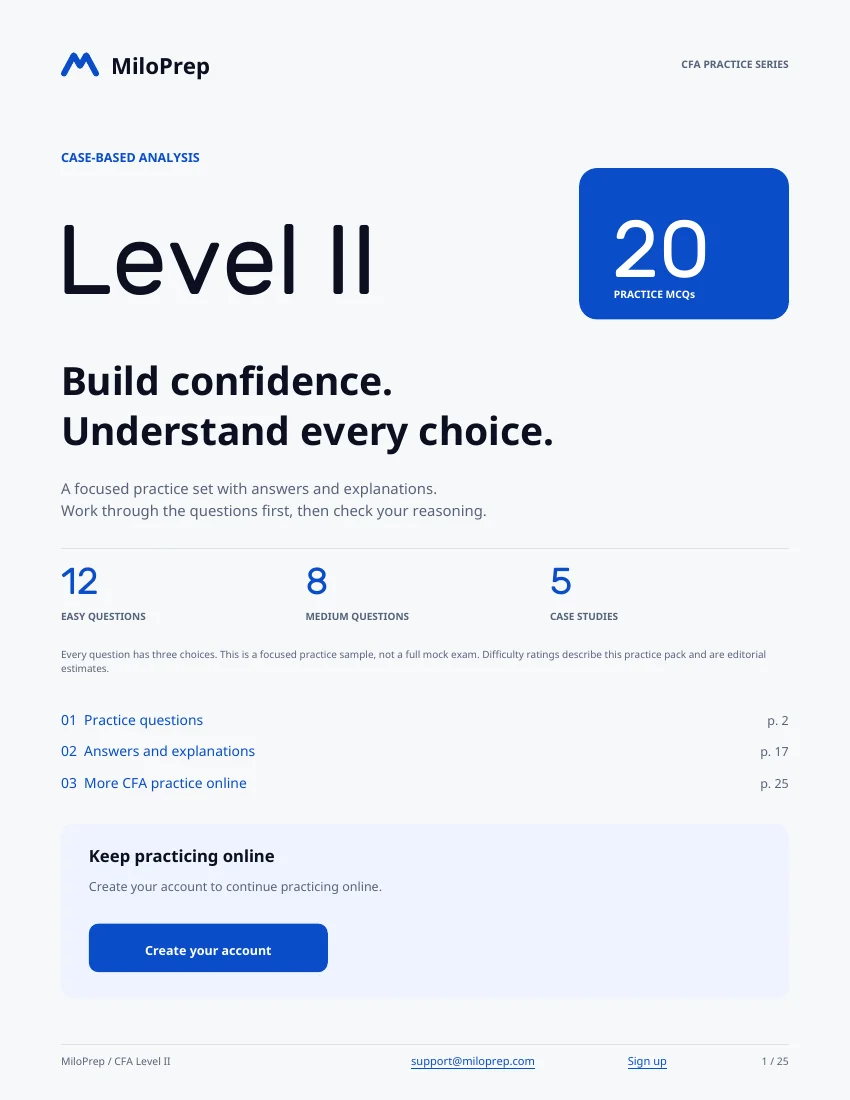
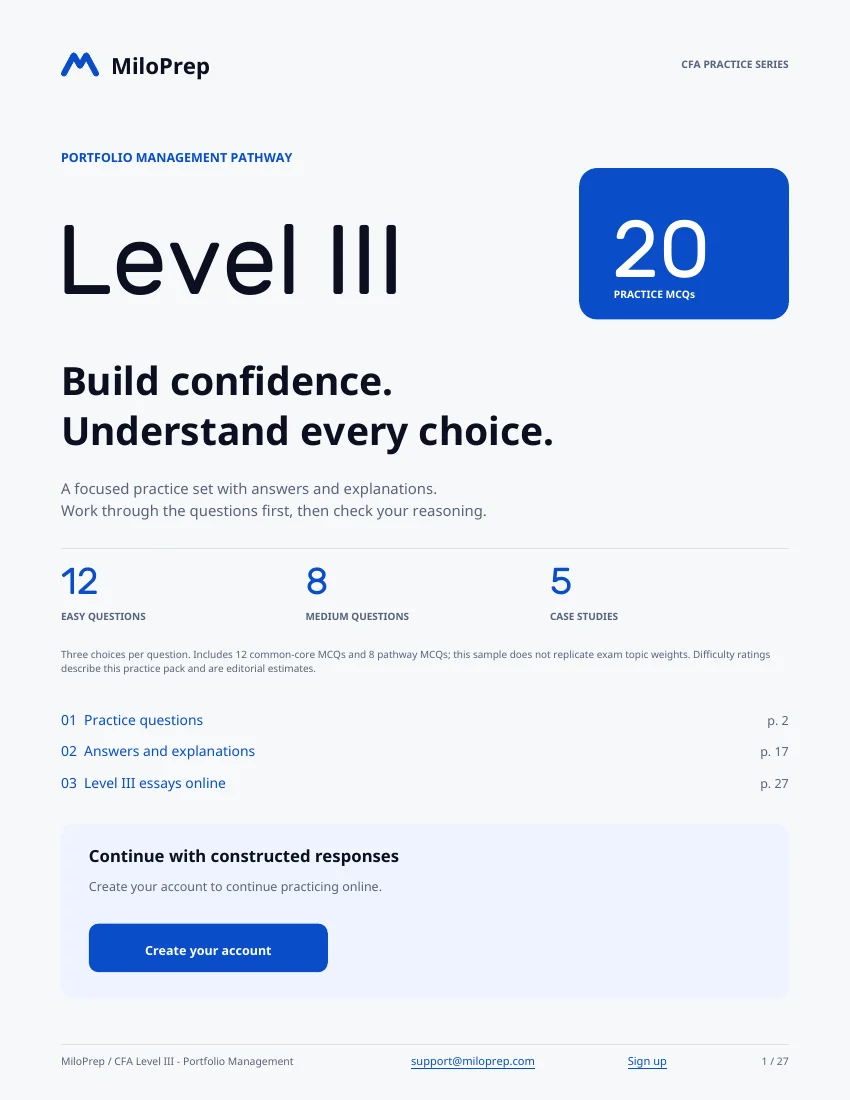
Free PDF by email
All 5 CFA practice PDFs, in one email
Enter your email on the PDF page to receive all 5 printable packs, with answers and explanations. Selected level/pathway questions; see the topic mix before requesting.
No account or payment required for the PDFs. Includes the monthly newsletter; unsubscribe anytime.
Put the method to work
One worked example, from facts to answer
Given
A candidate’s registration specifies Private Markets. They also have a Portfolio Management pathway workbook.
Method
Use the Private Markets outline to map pathway outcomes, and use common-core material only where its outcomes match.
Answer and interpretation
The other pathway’s workbook cannot substitute for the registered pathway’s coverage. Check the outline year as well as the pathway.
Original independent teaching example. Assumptions are stated above; this is not an official exam question or scoring key.
Apply the framework, step by step
Compare the study emphasis of the three Level III pathways and match materials to the registered pathway and exam year. This is a concise learning comparison; registration and full pathway selection are separate tasks.
Before you start: The distinction between common-core and pathway material, the booked curriculum year and the pathway recorded in the candidate account.
METHOD 01
Common core
All pathways share Asset Allocation, Portfolio Construction, Performance Measurement, Derivatives and Risk Management, and Ethics.
Start with the shared core: Asset Allocation, Portfolio Construction, Performance Measurement, Derivatives and Risk Management, and Ethics. The official Level III structure combines this core with the chosen pathway. A pathway choice changes the specialized preparation, not the obligation to learn the common core. The published pathway weighting applies to that area as a whole, not to every technique inside it.
Avoid this mistake: A pathway does not replace common-core preparation.
METHOD 02
Portfolio Management
Focus on portfolio strategies, implementation and the management of investment mandates.
Portfolio Management emphasizes investment mandates, portfolio strategies and implementation decisions. Match the registered pathway outline to the exam year, then identify the outcomes that your resources actually teach. Materials aimed at a different pathway may share some background concepts but should not be counted as coverage of this pathway’s specialized outcomes.
Avoid this mistake: Choose the matching official pathway outline, not a different pathway’s notes.
METHOD 03
Private Markets
Focus on private investment structures, analysis, due diligence and value creation.
Private Markets emphasizes private investment analysis, structures, due diligence and value creation. Private Wealth emphasizes individual and family objectives, planning and wealth-management decisions. Compare the analytical tasks and your intended work rather than assuming one pathway has a universally easier exam. Similar concepts, such as illiquidity or tax, can appear with a different purpose in each pathway.
Avoid this mistake: Illiquidity, commitments and exit assumptions need explicit attention.
METHOD 04
Private Wealth
Focus on individual and family objectives, planning and wealth-management decisions.
Use the pathway in your actual registration as the controlling preparation choice. Check both the pathway and the year on an outline or workbook before planning study time. A switch in professional interest does not itself change the registration record. This page does not process a change or determine eligibility; consult the official pathway information and your candidate account for the current rules.
Avoid this mistake: Client constraints and the case’s tax and transfer rules shape the answer.
Apply it to a different case
- New facts
- A candidate has 20 hours for an illustrative review week and chooses a 65% common-core / 35% pathway split. This is a study-planning choice, not an official required hour allocation.
- Working
- Common-core review = 20 × 0.65 = 13 hours. Registered-pathway review = 20 × 0.35 = 7 hours.
- Conclusion
- The week contains 13 common-core hours and 7 pathway hours. Adjust from actual weaknesses; exam weights do not prescribe this study schedule.
Original teaching case under the stated assumptions, rather than an official exam question.
Questions about this method
- Does choosing a pathway remove the common core?
- No. The pathway is combined with common-core material. Prepare the shared topics as well as the specialized outcomes in the matching pathway outline.
- Can I use one pathway’s workbook for another pathway?
- Shared concepts may be useful, but it cannot substitute for the registered pathway’s outcome coverage. Match pathway and curriculum year when selecting the main preparation materials.
- Which pathway is easiest?
- These notes do not establish an easier pathway. Compare the official outcomes with your knowledge and intended analytical work, while preparing for the pathway in your registration.
Sources and curriculum scope
Official outlines establish curriculum scope. The explanations and worked examples are independent teaching material; the sources do not verify or endorse them.
- 2026 CFA Level 3 portfolio management outline
- Official Level 3 format and curriculum
- 2026 CFA Level 3 private markets outline
- 2026 CFA Level 3 private wealth outline
- Official Level III specialized pathways
- 2027 CFA Level 3 portfolio management outline
- 2027 CFA Level 3 private markets outline
- 2027 CFA Level 3 private wealth outline
MiloPrep is an independent study resource, not affiliated with or endorsed by CFA Institute. CFA® and Chartered Financial Analyst® are trademarks owned by CFA Institute.