CFA Level 3 Ethics: notes and free practice
CFA Level 3 Ethics connects professional obligations to portfolio and client decisions. State the required conduct and support it with case evidence; a profitable outcome does not excuse a breach of duty.
The key ideas, at a glance
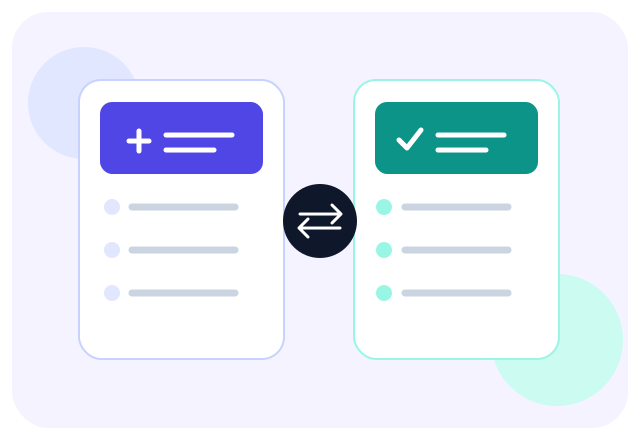
Start with the mandate
Read the visual, then follow the worked example below. Use the stated case assumptions.
Illustrative worked case
Does the proposed vehicle satisfy the mandate?
Leverage is prohibited
Reject the leveraged vehicle under this mandate
The vehicle is permitted
Continue suitability and investment analysis
The original case prohibits leverage. A higher expected return cannot override that binding restriction.
| Concept | Rule or decision | Common mistake |
|---|---|---|
| Start with the mandate | A good investment can still be unsuitable for this account. | A high expected return does not override an explicit restriction. |
| Allocate fairly | Use a documented, fair allocation process before knowing the winners. | Fair dealing does not require identical positions for accounts with different needs. |
| Expose the conflict | Disclose clearly, and manage the conflict before acting. | Disclosure alone does not make a prohibited transaction permissible. |
| Prevent, then escalate | Identify the information boundary and act on evidence of a breach. | Client benefit is not a defense for trading on material nonpublic information. |
01Start with the mandate
A good investment can still be unsuitable for this account.
Watch for: A high expected return does not override an explicit restriction.
02Allocate fairly
Use a documented, fair allocation process before knowing the winners.
Watch for: Fair dealing does not require identical positions for accounts with different needs.
03Expose the conflict
Disclose clearly, and manage the conflict before acting.
Watch for: Disclosure alone does not make a prohibited transaction permissible.
04Prevent, then escalate
Identify the information boundary and act on evidence of a breach.
Watch for: Client benefit is not a defense for trading on material nonpublic information.
Selected 2026 study concepts. Match your preparation to your registered exam-year curriculum. These notes are not complete curriculum coverage.
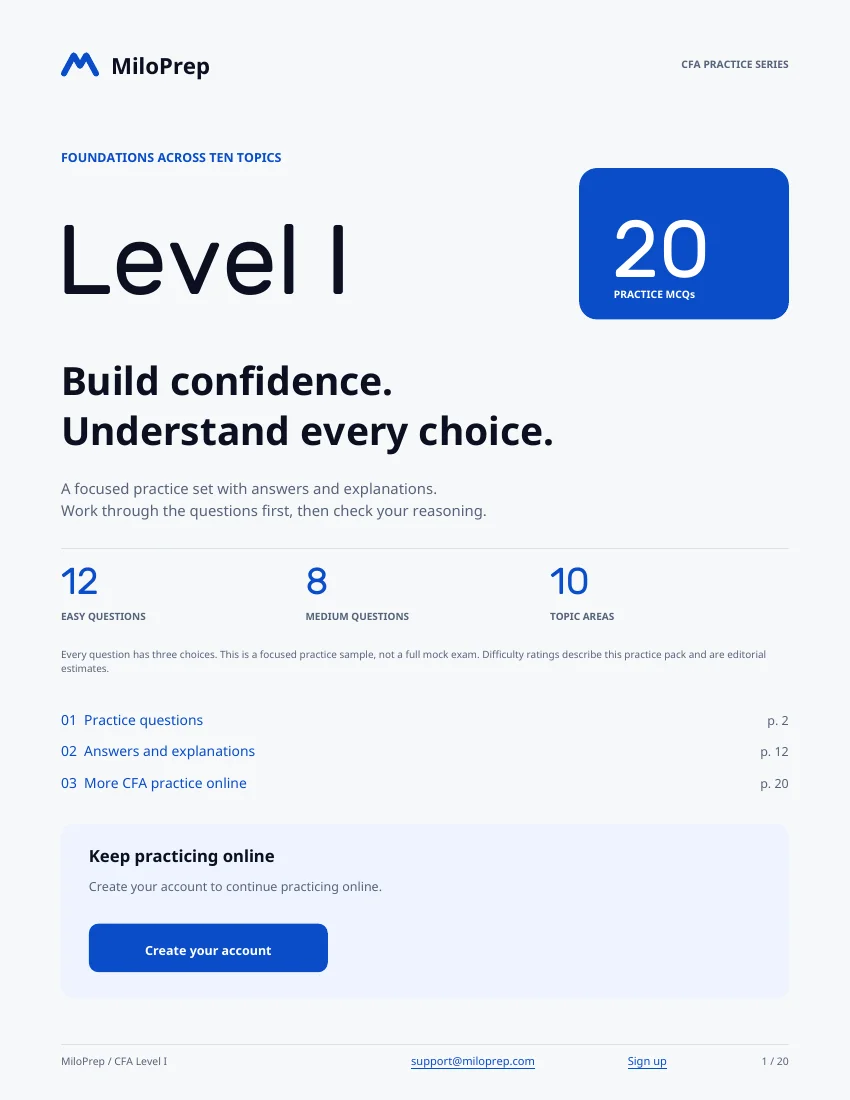
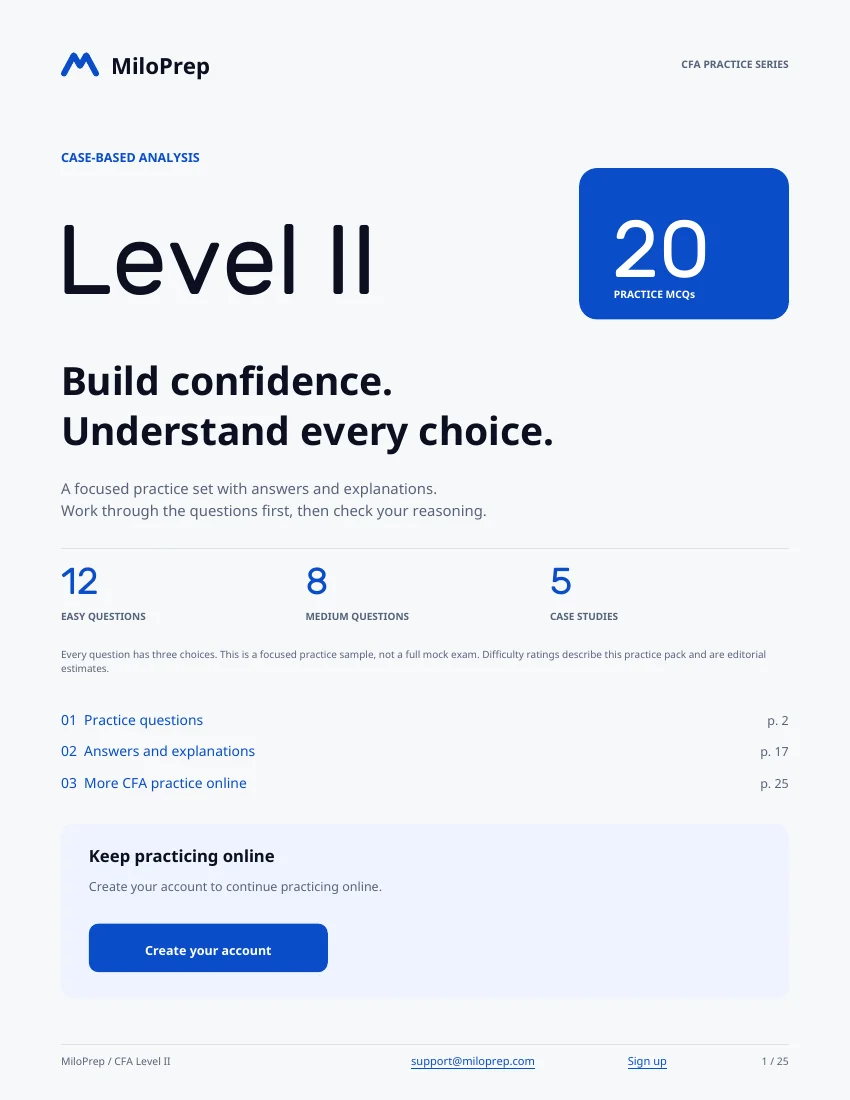
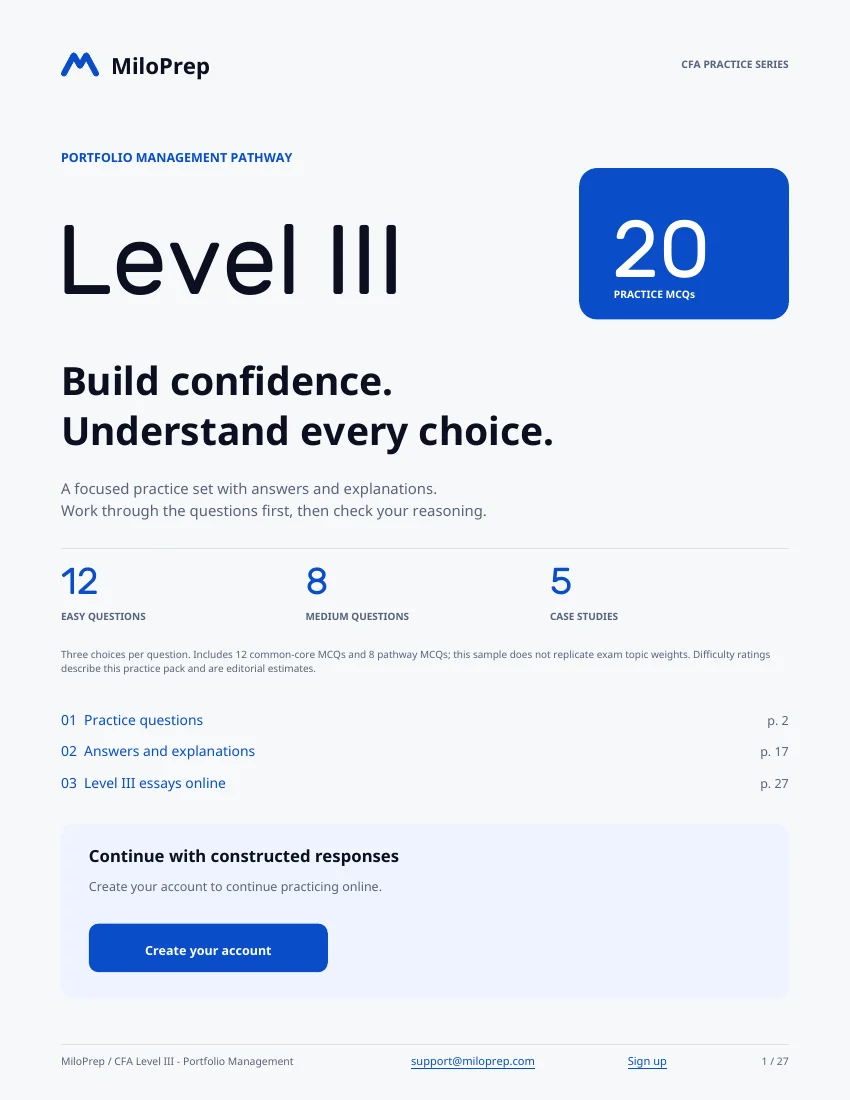
Free PDF by email
All 5 CFA practice PDFs, in one email
Enter your email on the PDF page to receive all 5 printable packs, with answers and explanations. Selected level/pathway questions; see the topic mix before requesting.
No account or payment required for the PDFs. Includes the monthly newsletter; unsubscribe anytime.
Common core, for all three pathways. Selected 2026 concepts, not complete curriculum coverage. Choose pathway-specific practice or check 2027 changes.
Put the method to work
One worked example, from facts to answer
Given
An income mandate prohibits leverage; a manager proposes a leveraged fund.
Method
Compare the vehicle with the binding mandate before estimating its return.
Answer and interpretation
Do not buy it under the existing mandate, even if expected returns improve.
Original independent teaching example. Assumptions are stated above; this is not an official exam question or scoring key.
Try it here - no account needed
10 free Ethics questions
Five multiple-choice questions and five written prompts. Self-review written answers against teaching rubrics, not official scoring keys. Short independent cases, not a mock or pass prediction.
Saved in this tab when storage is available. Responses are not uploaded.
Completed
0 / 10
MCQ correct
0 / 0
Self-reviewed
0
Completion is not an exam score. Written responses are self-reviewed, not automatically graded.
- Question 1 of 10Level III common-core sampleEthicsMultiple choice
Case facts
A charity account prohibits derivatives. Its manager proposes an option overlay solely to reduce risk; the policy has not changed.
Which action best respects the existing mandate?
Answer and explanations
The manager must respect the existing restriction; obtain a valid change before using the otherwise prohibited instrument.
Review the method- A: Lower risk does not cancel a binding prohibition in the mandate.
- B - correct: The manager must respect the existing restriction; obtain a valid change before using the otherwise prohibited instrument.
- C: Disclosure after trading does not authorize the prohibited strategy.
- Question 2 of 10Level III common-core sampleEthicsMultiple choice
Case facts
A firm uses pro rata allocation for suitable accounts. A and B request 600 and 400 shares. Only 500 shares are received.
How many shares should account A receive under this policy?
Answer and explanations
A receives 500 × 600/1,000 = 300 shares under the stated pro rata policy.
Review the method- A - correct: A receives 500 × 600/1,000 = 300 shares under the stated pro rata policy.
- B: Allocating all shares to A would ignore B and the pre-established policy.
- C: Equal allocation ignores the different eligible requests under this policy.
- Question 3 of 10Level III common-core sampleEthicsMultiple choice
Case facts
A consultant receives a fee from a manager for every client referred. A prospective client has not been told about the arrangement.
What must the consultant do before the client agrees to services?
Answer and explanations
Disclosure of the nature and value of the referral arrangement before agreement lets the client assess the potential conflict.
Review the method- A: Waiting for a question prevents the client from evaluating the incentive.
- B: After-the-fact disclosure misses the required opportunity to evaluate the arrangement.
- C - correct: Disclosure of the nature and value of the referral arrangement before agreement lets the client assess the potential conflict.
- Question 4 of 10Level III common-core sampleEthicsMultiple choice
Case facts
A portfolio manager receives an unannounced, material earnings forecast directly from the issuer CFO during a private call.
Which immediate response best protects market integrity?
Answer and explanations
Do not act or cause others to act on material nonpublic information; contact compliance to control its use.
Review the method- A: Small trade size does not make material nonpublic information usable.
- B - correct: Do not act or cause others to act on material nonpublic information; contact compliance to control its use.
- C: Tipping favored clients also improperly causes others to act on the information.
- Question 5 of 10Level III common-core sampleEthicsMultiple choice
Case facts
A manager serves a defined-benefit plan under a specific investment mandate. A trustee asks for a concentrated position outside that mandate.
Which consideration should govern the manager’s response?
Answer and explanations
The manager must act consistently with the plan mandate and beneficiary interests, clarifying authority before making a change.
Review the method- A: A single trustee request does not by itself validly replace the agreed mandate.
- B: The manager’s own risk preference is not the portfolio objective.
- C - correct: The manager must act consistently with the plan mandate and beneficiary interests, clarifying authority before making a change.
- Question 6 of 10Level III common-core sampleEthicsWritten response
Case facts
An adviser’s client retires and now needs near-term cash from a portfolio previously invested for long-term growth.
Recommend two steps before proposing a revised portfolio.
Model answer and self-review rubric
Update the client’s objectives, liquidity needs and risk capacity, then evaluate a suitable portfolio against the revised investment policy. Do not simply reuse the old growth allocation.
Review the methodTeaching checklist only. No official points or automated grade.
- Question 7 of 10Level III common-core sampleEthicsWritten response
Case facts
After a profitable block trade, a manager assigns its gains to a new high-fee account and its losses to older accounts with similar mandates.
Identify the conduct problem and recommend one preventive control.
Model answer and self-review rubric
This is unfair, outcome-driven allocation. Use and document a fair pre-trade allocation policy and independently review allocations; do not choose recipients after seeing performance.
Review the methodTeaching checklist only. No official points or automated grade.
- Question 8 of 10Level III common-core sampleEthicsWritten response
Case facts
A client offers a manager a personal bonus if the account beats its benchmark. The employer is unaware of the arrangement.
Recommend the action required before accepting this bonus.
Model answer and self-review rubric
Obtain written consent from all parties involved before accepting additional compensation that may create a conflict with the employer. Explain the incentive clearly; client consent alone is insufficient.
Review the methodTeaching checklist only. No official points or automated grade.
- Question 9 of 10Level III common-core sampleEthicsWritten response
Case facts
A supervisor learns that an analyst is using fabricated research data. The supervisor merely reminds the analyst of the code and keeps distributing the reports.
Explain why this response is inadequate and recommend a next action.
Model answer and self-review rubric
A reminder is insufficient once evidence of misconduct exists. Investigate promptly, stop distributing the suspect reports, and implement controls to prevent repetition while escalating through compliance.
Review the methodTeaching checklist only. No official points or automated grade.
- Question 10 of 10Level III common-core sampleEthicsWritten response
Case facts
A firm adopts the Asset Manager Code but allows a single trader to approve transactions and mark the same illiquid positions without independent checks.
Recommend two controls that address the weaknesses in this case.
Model answer and self-review rubric
Separate trading authority from independent oversight and valuation. Use documented valuation procedures with independent review of hard-to-price assets, supported by compliance monitoring.
Review the methodTeaching checklist only. No official points or automated grade.
Four ideas to put to work
Find the method you need
Start with: Code and Standards terminology, investment mandates and basic portfolio suitability.
METHOD 01
Start with the mandate
A good investment can still be unsuitable for this account.
- Read the objectives, constraints and permitted instruments.
- Assess the investment within the whole portfolio.
- Resolve missing or changed client facts before recommending.
Worked example
- Given
- An income mandate prohibits leverage; a manager proposes a leveraged fund.
- Calculate / decide
- Compare the vehicle with the binding mandate before estimating its return.
- Result
- Do not buy it under the existing mandate, even if expected returns improve.
Watch for: A high expected return does not override an explicit restriction.
Practise this ideaMETHOD 02
Allocate fairly
Use a documented, fair allocation process before knowing the winners.
- Identify eligible accounts and actual demand.
- Apply the pre-established allocation policy.
- Keep records; do not favor personal or high-fee accounts.
Worked example
- Given
- Eligible accounts request 300 and 200 shares; only 250 shares are available.
- Calculate / decide
- Under the stated pro rata policy: 250 × 300/500 and 250 × 200/500.
- Result
- Allocate 150 and 100 shares respectively.
Watch for: Fair dealing does not require identical positions for accounts with different needs.
Practise this ideaMETHOD 03
Expose the conflict
Disclose clearly, and manage the conflict before acting.
- Identify who benefits from the recommendation.
- Make full, understandable disclosure to the relevant parties.
- Obtain required consent and preserve independent judgment.
Worked example
- Given
- An adviser receives a referral payment for recommending a custodian.
- Calculate / decide
- Explain the nature and value of the arrangement to the prospective client.
- Result
- The client can assess the incentive before agreeing to the service.
Watch for: Disclosure alone does not make a prohibited transaction permissible.
Practise this ideaMETHOD 04
Prevent, then escalate
Identify the information boundary and act on evidence of a breach.
- Separate public research from material nonpublic information.
- Use compliance controls and restricted lists where appropriate.
- Stop participation in misconduct and document escalation.
Worked example
- Given
- A director privately reveals a material, unannounced takeover.
- Calculate / decide
- Do not trade or recommend trading on that information; notify compliance.
- Result
- Restrict its use while compliance determines the appropriate controls.
Watch for: Client benefit is not a defense for trading on material nonpublic information.
Practise this ideaQuestions about this topic
- Can a beneficial investment outcome excuse improper conduct?
- No. Professional duties concern the conduct and decision process as well as client treatment. A profitable outcome does not remove a violation of the applicable standard.
- Does a performance claim need context?
- Yes. Present performance fairly and accurately with the relevant basis and limitations. A selected favorable account or period can mislead when represented as evidence of a broader record.
- How should I justify an ethical action in a written answer?
- State the action and connect it to the applicable duty and decisive case fact. Avoid substituting a general statement about good intentions for the specific professional requirement.
Sources and curriculum scope
Official outlines establish curriculum scope. The explanations and worked examples are independent teaching material; the sources do not verify or endorse them.
- 2026 Level III common-core outline: Ethics
- Level III format and common-core versus pathway structure
- Code of Ethics and Standards of Professional Conduct
- 2026 CFA Level 3 portfolio management outline
- 2027 CFA Level 3 portfolio management outline
MiloPrep is an independent study resource, not affiliated with or endorsed by CFA Institute. CFA® and Chartered Financial Analyst® are trademarks owned by CFA Institute.